As California faces hotter conditions, more frequent wildfires, and growing pressure on water supplies, communities are looking for practical ways to prepare for the future—including rethinking the landscapes around homes and public spaces.
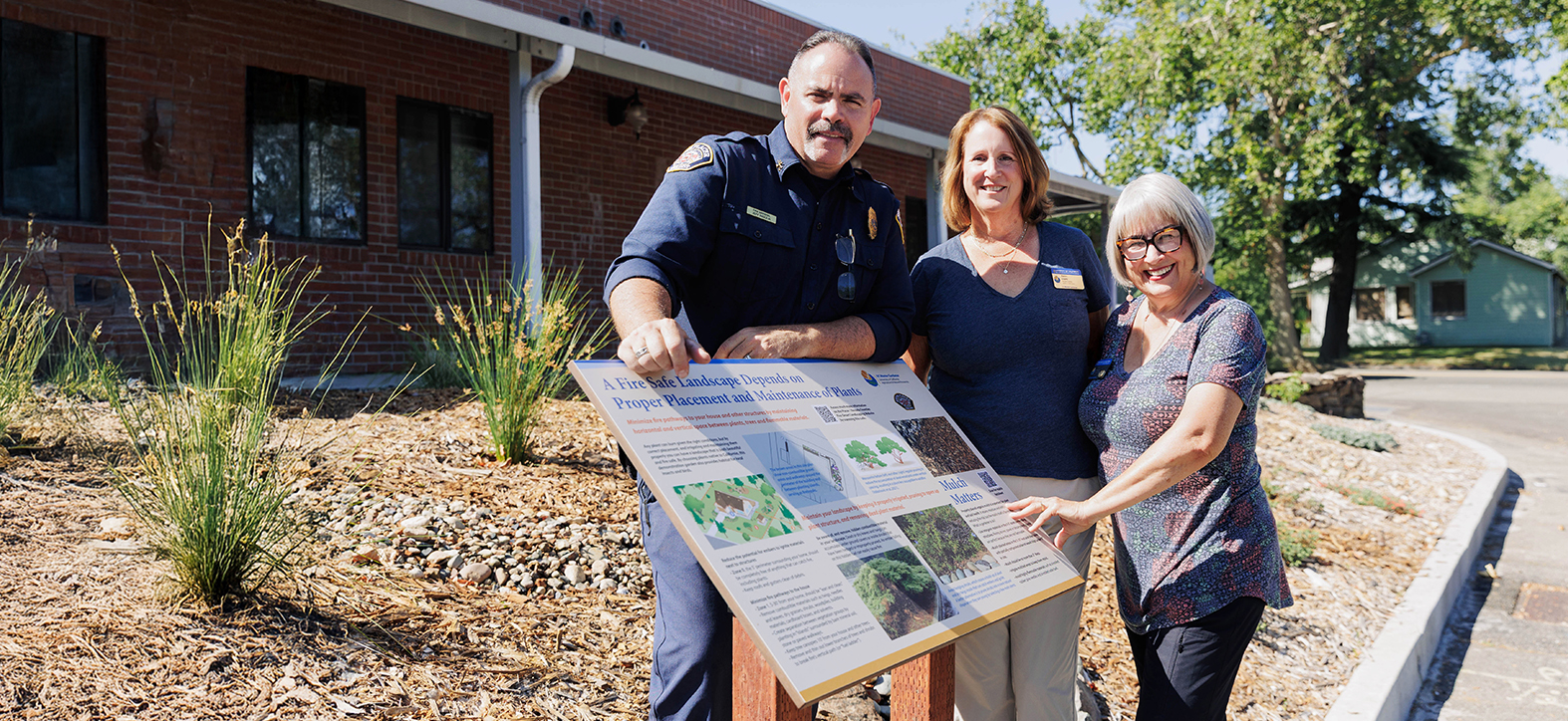
In Loomis, a new water-wise, fire-smart demonstration garden at South Placer Fire District Station 18 is helping show how landscapes can support both wildfire preparedness and water efficiency.
Created through a partnership between the South Placer Fire Protection District, the UC Master Gardeners of Placer County, Placer County Water Agency, UC Cooperative Extension, and local volunteers and businesses, the project transformed an aging landscape into a community resource focused on resilience, water efficiency, and wildfire preparedness.
“We wanted to create a positive example for our community and provide residents with practical information they could apply to their own homes and properties,” said South Placer Fire District Division Chief Jeff Ingolia.
The garden demonstrates key fire-smart landscaping techniques, including maintaining a clear 0–5-foot zone around structures, separating vegetation into islands with noncombustible materials, and selecting plants adapted to local conditions. California native and low-water-use plants were chosen not only for their beauty, but also for their ability to support pollinators and wildlife while using water more efficiently.
“We chose California native plants which, when properly watered and maintained, are both water-wise and beneficial for pollinators and wildlife,” said one of the garden’s designers, Tece Markel of the UC Master Gardeners of Placer County.
The project also demonstrates how landscapes can serve multiple purposes at once—reducing wildfire risk, supporting biodiversity, slowing stormwater runoff, and conserving water.
PCWA supported the project through rebates for the garden’s water-efficient drip irrigation system and continues to offer resources to help customers create water-wise, fire-smart landscapes at home.
As the landscape continues to mature, the garden offers a visible example of how thoughtful landscaping and community collaboration can help shape a more resilient future for Placer County.